No-Equipment Workout: 20 Minutes to Full Body Fitness
Quick Answer: A 20-minute no-equipment full-body workout works because it’s structured, not random: 2 minutes to warm up, 16 minutes of compound bodyweight moves like squats, push-ups, lunges, and planks, and 2 minutes to cool down. That structure alone is enough to train every major muscle group without a single piece of gear.
Your gym bag is still sitting by the door where you dropped it Tuesday. The dumbbells in the garage haven’t moved in weeks. None of that matters for this workout — all you need is a patch of floor, a timer, and twenty honest minutes.

Why does a 20-minute bodyweight workout actually work?
Because it leans on compound movements that recruit multiple muscle groups at once instead of isolating one at a time. A squat alone works your quads, glutes, hamstrings, and core just to keep you upright. Stack four or five of these moves back to back and you’ve built a genuinely full-body workout in less time than it takes to drive to the gym.
The other secret is density. Twenty minutes with almost no rest between exercises keeps your heart rate elevated the whole time, so you’re getting a strength session and a light cardio session in the same window. You don’t need more time — you need less wasted time.
What should the 2-minute warm-up include?
Skip static stretching here; it’s better saved for the end. Instead, spend your two minutes on movement that raises your body temperature and wakes up the joints you’re about to use:
- Arm circles — about 20 seconds each direction to loosen the shoulders
- Leg kicks — front-to-back swings to open the hips
- Dynamic stretching — bodyweight lunges or torso twists to prime your core
By the end of these two minutes your heart rate should be noticeably up and your joints should feel looser, not tired. That’s the whole goal — arrive at minute three ready to move, not gassed out before you’ve started.
What’s in the 16-minute main workout, and in what order?
This is where the real work happens, built around four bodyweight staples: squats, push-ups, lunges, and plank variations. A simple, effective approach is to rotate through them in a circuit rather than finishing all of one move before starting the next — it keeps things interesting and spreads the fatigue around evenly.
A workable structure looks like this:
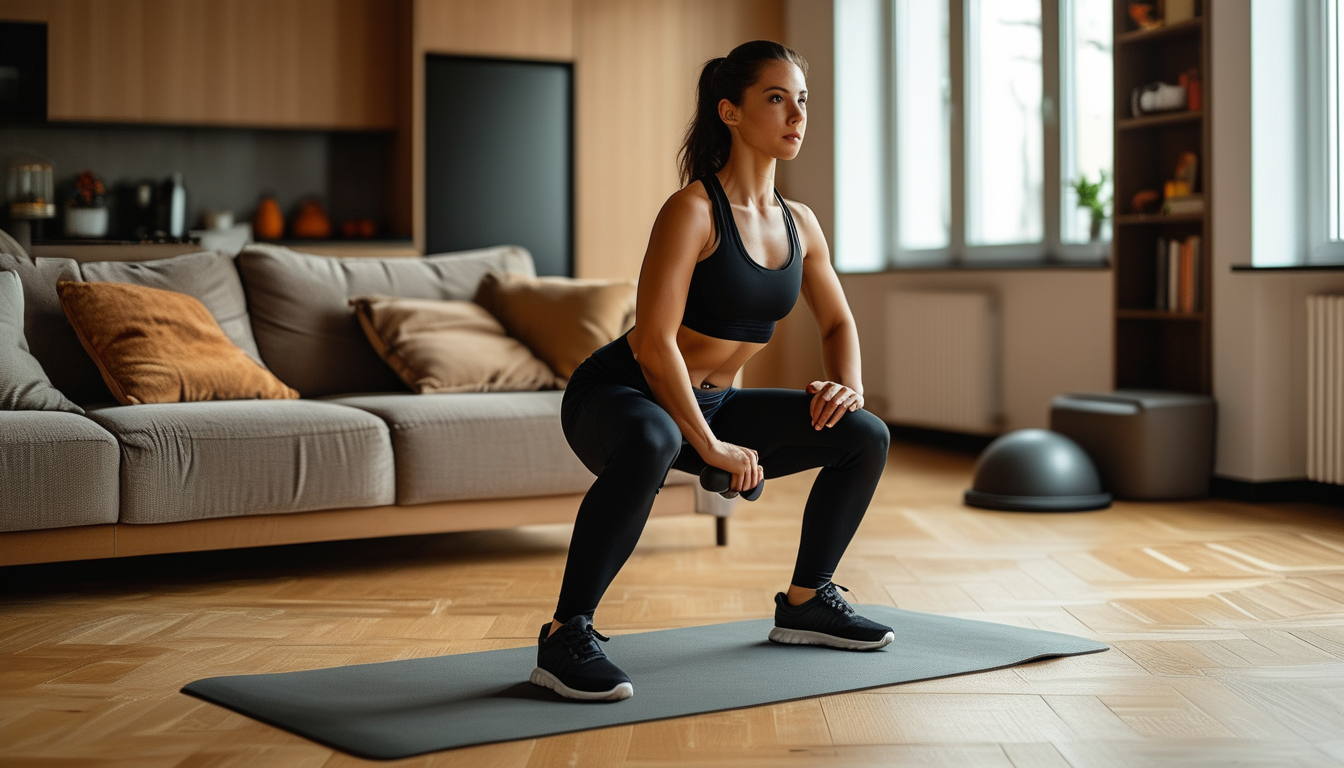
- Bodyweight squats — 3 rounds of about 15 reps for quads, glutes, and hamstrings
- Push-ups (full or modified on the knees) — 3 rounds of 10-12 reps for chest, shoulders, and triceps
- Lunges — 3 rounds of 10 per leg to challenge balance and single-leg strength
- Plank variations — 3 rounds of 30-45 second holds for a rock-solid core
Rest just 20-30 seconds between rounds. If that sounds tough, it’s supposed to feel challenging by round two — that’s the density doing its job.
Do you need to modify any of these moves?
Almost certainly, and that’s completely normal. Push-ups can drop to your knees or be done against a wall or countertop if a full push-up isn’t there yet. Squats can be shallower, and lunges can be done holding onto a chair for balance while you build confidence. Modifying a move isn’t cheating — it’s how you build toward the full version safely.
If you’re returning from an injury, pregnant, or managing a chronic condition, it’s worth checking in with a doctor or physical therapist before diving into a new bodyweight routine, especially the plank and lunge work. A quick conversation upfront can save you weeks of setback later.
Why does the 2-minute cool-down matter?
Because your muscles are warm, pliable, and primed for the two things that actually improve flexibility and reduce next-day stiffness: gentle stretching and breathing exercises. Skipping this step doesn’t save you meaningful time — it just trades two calm minutes now for a rougher morning tomorrow.
Hold a hamstring stretch, a quad stretch, and a chest opener for 20-30 seconds each, breathing slowly through your nose. It’s also a nice moment to just notice how your body feels after showing up for it — no equipment needed, just you.
5 Mistakes Everyone Makes With No-Equipment Workouts
- Skipping the warm-up because “it’s just bodyweight.” Cold muscles get injured regardless of whether you’re holding a barbell or nothing at all.
- Racing through reps instead of controlling them. A slow, controlled squat works harder than five sloppy fast ones — your muscles can’t tell the difference between effort and speed.
- Letting the plank turn into a hip-sag competition. Form beats duration every time; 20 clean seconds beats 60 sagging ones.
- Doing the same 20 minutes every single day. Muscles need recovery time to actually grow stronger; alternate with rest or lighter mobility days.
- Comparing your push-up count to someone else’s. Your only real competition is the version of you from last week.
FAQ: No-Equipment Workouts
Can you actually get fit with just bodyweight exercises?
Yes — bodyweight training builds real strength, endurance, and muscle tone, especially for beginners and intermediates. Once moves like push-ups and squats get too easy, you can increase difficulty with tempo changes, added reps, or harder variations instead of needing a single piece of equipment.
How often should you do a 20-minute bodyweight workout?
Three to four times a week is a solid starting cadence, leaving room for rest or lighter movement in between. Your muscles actually grow and repair on rest days, so more isn’t automatically better here.
Is 20 minutes really enough time to see results?
It’s enough to build a consistent habit, and consistency is what drives results over weeks and months. A focused 20 minutes done regularly will outperform an occasional 90-minute session almost every time.
TL;DR:
- A 20-minute bodyweight circuit (2-minute warm-up, 16-minute main set, 2-minute cool-down) trains your whole body with zero equipment.
- Compound moves like squats, push-ups, lunges, and planks work multiple muscle groups at once for maximum efficiency.
- Modify any move to match your current fitness level — it’s smart progression, not cheating.
- Don’t skip the warm-up or cool-down; they protect your joints and reduce next-day stiffness.
- Check in with a doctor or PT before starting if you’re pregnant, injured, or managing a chronic condition.
Keep Reading
This article is for general informational purposes only and is not medical advice. It is not a substitute for professional diagnosis or treatment. Always consult a qualified healthcare provider about your individual situation, especially before making significant changes to your diet or exercise routine.