Why Your Home Gym Floor Decides Which Exercises Actually Work
Quick Answer: Your floor changes friction, cushioning and stability, and each of those makes some exercises better and others worse. Carpet ruins sliding and plank stability but forgives impact. Hard floors are excellent for lifting and terrible for jumping and kneeling. Rather than fighting your surface, choose the exercises it supports and use a single well-placed mat for the rest.
You followed the same programme as everyone else.
Half of it felt fine and half of it felt wrong, and you assumed it was you.
Quite often it is the two square metres you are standing on.
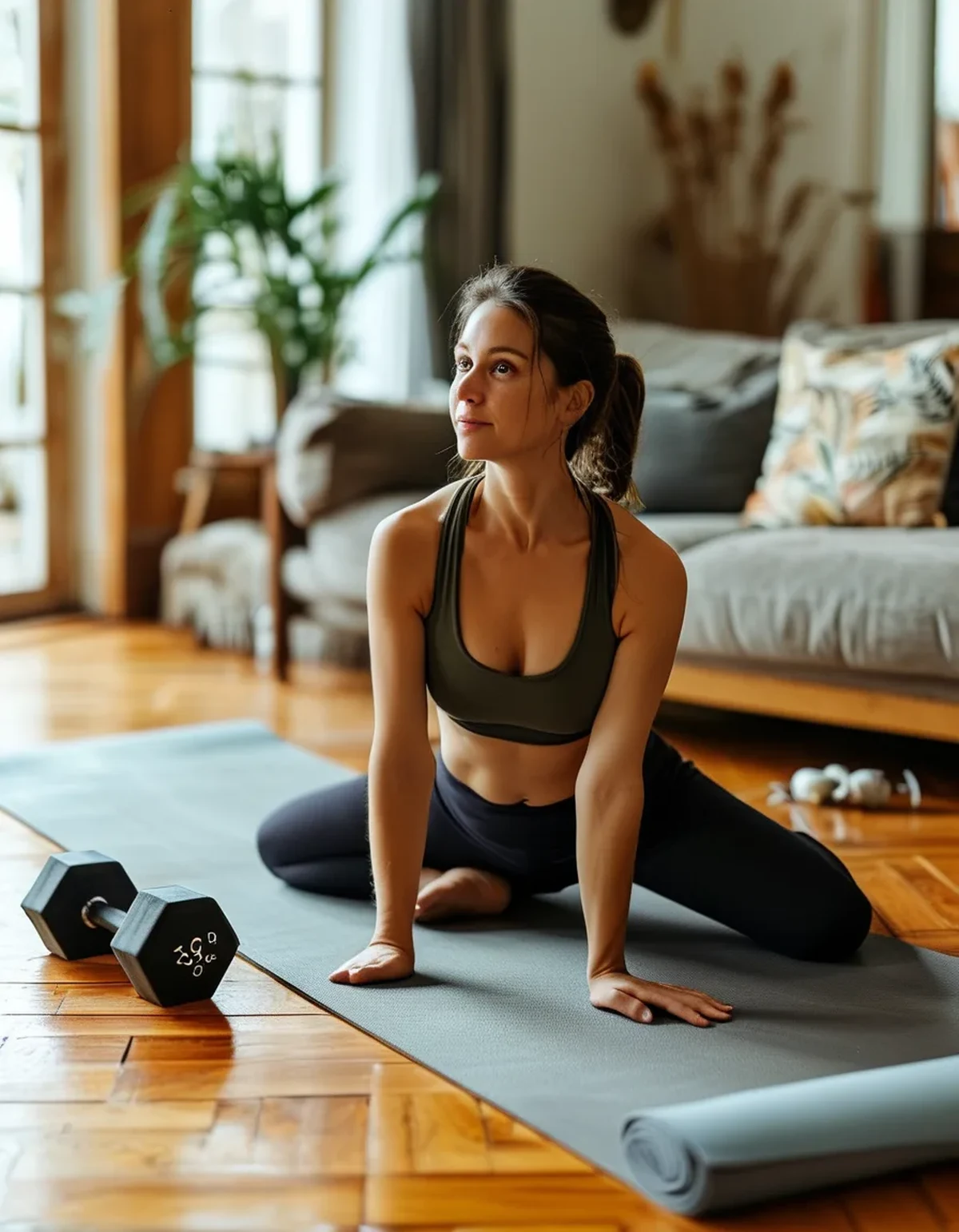
What does your floor actually change?
Three variables, and almost every home workout problem traces back to one of them.
Friction determines whether your feet, hands and equipment stay where you put them. Too little and you slide during a lunge or a push-up. Too much — carpet is the usual culprit — and your foot cannot pivot, which loads the knee.
Cushioning determines impact and comfort. This matters for jumping, for kneeling, and for anything where a body part rests on the floor under load.
Stability, meaning how much the surface deforms under you, determines how much of your effort goes into the exercise rather than into managing the surface. Thick carpet and soft foam both absorb force that you intended to send somewhere useful.
A good surface for a deadlift is a bad surface for a burpee. That is not a flaw in your setup — it is just physics, and it is worth planning around.
Which exercises does carpet quietly ruin?
More than people expect, and mostly in ways that are easy to misread as a strength problem.
Planks and push-ups suffer because thick pile deforms unevenly under your hands and forearms, so your shoulder is constantly making micro-corrections. You fatigue faster and it feels like a core failure.
Anything with a pivot — reverse lunges with a turn, skaters, lateral shuffles — becomes a knee risk, because high-friction carpet grips the shoe while your body keeps rotating.
Sliders and towel exercises simply do not work. Hamstring curls with sliders need a hard, low-friction surface.
Any loaded static hold on one foot is harder than it should be, because the carpet keeps giving way slightly and your ankle spends the set stabilising the floor.
What carpet is genuinely good at is impact absorption and knee comfort. Jumping, kneeling work, glute bridges and floor-based core work are all more pleasant on carpet than on tile.
What about hard floors, and where do they fail?
Laminate, wood and tile are the best surfaces for anything where you want your force to go into the movement rather than into the floor.
They are excellent for loaded standing work — squats, deadlifts, presses, rows — because the surface does not deform. They are also the only sensible surface for sliders.
They fail in three specific ways. Impact goes straight through your joints, so repeated jumping on tile is a poor idea. Kneeling is uncomfortable enough that you will unconsciously shorten sets. And sock friction is genuinely dangerous — a slipped foot mid-lunge on laminate is one of the more common home injuries.
There is also a household consideration that people discover late: dropping even a light dumbbell on laminate or tile leaves permanent marks, and on tile it can crack. Set weights down under control, on a mat, or accept the cost.
What Nobody Tells You About Home Gym Flooring
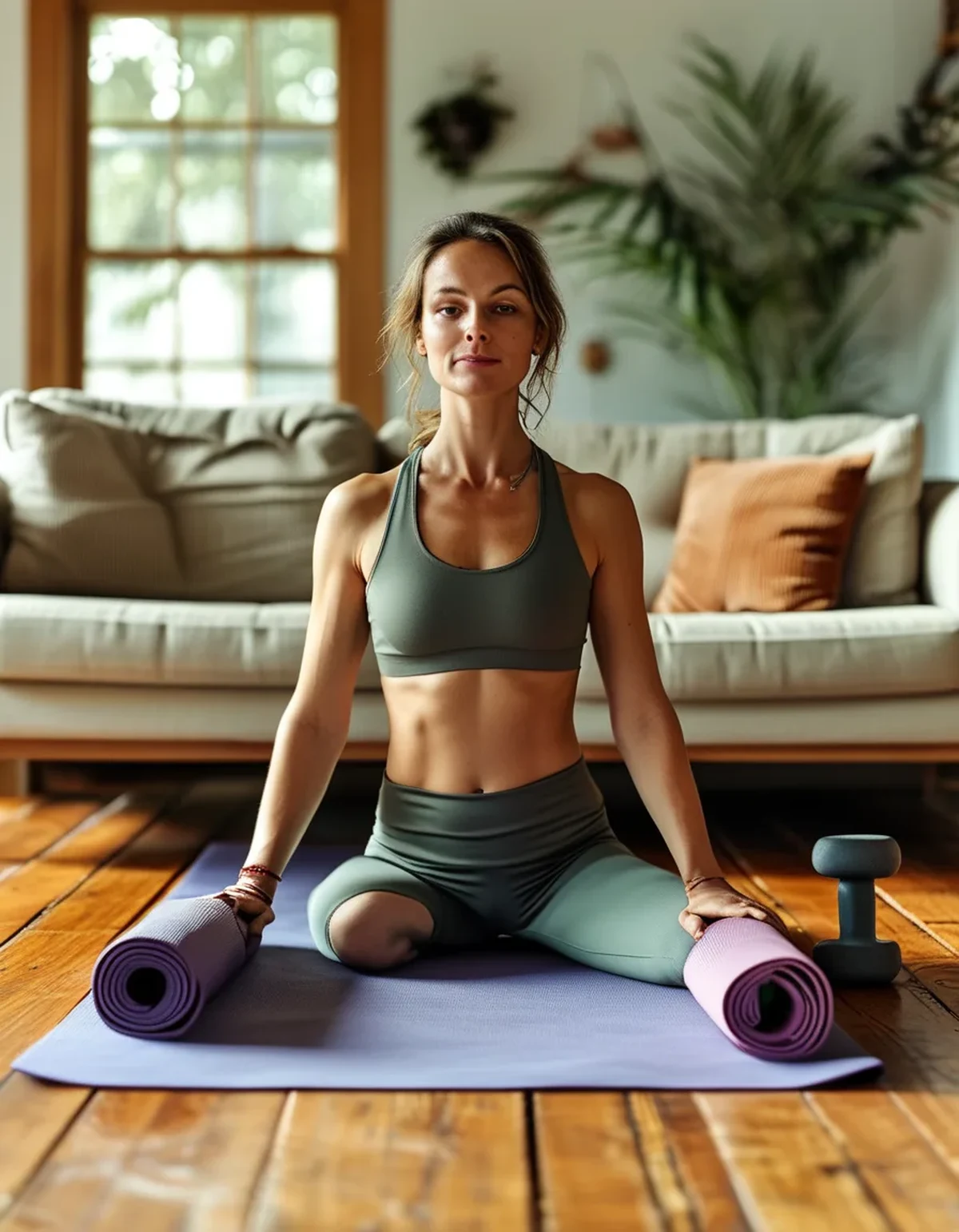
One mat in the right place beats wall-to-wall coverage. A single 6mm to 10mm rubber or dense foam mat, roughly 180 by 60cm, covers the majority of what a home lifter needs. Put it where your standing work happens, not where you do yoga.
Thick is not better. Soft, thick foam mats — the 20mm interlocking puzzle type — are comfortable for kneeling and terrible for balance work and loaded standing exercises. Density matters more than thickness.
Bare feet solve most slipping. If you are on laminate and slipping in socks, going barefoot is free and fixes it entirely. It also improves your foot position awareness on squats.
Underfloor structure matters as much as surface. A suspended timber floor on an upper storey will bounce and transmit noise regardless of what you put on top of it. If you live above someone, this is the constraint that shapes your programme, not the flooring.
Rugs are the worst of both worlds. A rug on a hard floor gives you unpredictable friction with a slipping hazard at the edges. Either train on the rug fully or move it out of the way entirely.
How do you build a programme around the floor you have?
Start by naming your surface honestly, then choose the version of each movement pattern that suits it.
If you have carpet: favour step-ups, split squats, hip thrusts, floor press, dead bugs and glute bridges. Replace slider hamstring curls with single-leg hip thrusts. Replace lateral shuffles with lateral step-outs with a band. Add one small hard surface — a plywood board or a firm mat — if you want to reintroduce planks and push-ups properly.
If you have hard floors: favour loaded standing work, sliders and controlled lunge patterns. Add a mat for anything kneeling, and swap jump squats for fast concentric squats without leaving the floor if you are on tile or above a neighbour.
If you have a mixed space, which most people do, define two zones. A lifting zone on the hardest, flattest surface, and a floor zone with a mat for core, mobility and kneeling work. Put your equipment at the boundary so you are not carrying dumbbells across the room mid-set.
This is worth ten minutes of planning once, and it removes a recurring source of interrupted sessions.
FAQ: Home Gym Floor Questions, Answered
What thickness of mat should I buy?
For general strength work, 6mm to 10mm of dense rubber is the sweet spot — enough to protect the floor and your knees, firm enough to stand and lift on. Go thicker only if the mat is specifically for jumping or dropping weights.
Can I do plyometrics at home at all?
On a suspended upper floor, keep it low volume and low amplitude, and prioritise quiet, controlled landings over height. On a ground floor with a mat, most people are fine. If in doubt, substitute fast concentric work that does not leave the ground.
Is a yoga mat enough?
For mobility, core and bodyweight work, usually yes. For loaded standing work it is too thin and too slippery underfoot when it is warm, and it will bunch under a lunge.
TL;DR:
- Your floor sets friction, cushioning and stability, and every home workout complaint traces back to one of them.
- Carpet blocks pivots, sliders and stable planks but forgives impact; hard floors are the opposite.
- One dense 6mm to 10mm mat in the right spot beats covering the whole room in soft foam.
- Define a lifting zone and a floor zone and choose exercise variations that match each.
The best home gym upgrade is usually not equipment. It is deciding which two square metres you train on and building the programme around them.
Keep Reading
This article is for general informational purposes only and is not medical advice. It is not a substitute for professional diagnosis or treatment. Always consult a qualified healthcare provider about your individual situation, especially before making significant changes to your diet or exercise routine.