What to Do When Your Heaviest Dumbbells Stop Feeling Heavy
Quick Answer: Load is one variable among many, and home lifters run out of it first because they never touch the others. Slowing the lowering phase to four seconds, adding pauses at the hardest position, shifting to single limb versions, extending range with a deficit, and compressing rest all make the same dumbbells decisively harder — and research is clear that lighter weights taken close to failure build muscle comparably to heavy ones. The progression menu runs tempo, pauses, unilateral, range, density, and only then load. Work the list in order and the same pair buys you months; skip to the checkout page and you buy a heavier way to repeat the mistake.
The dumbbells did not get too light. The reps got too comfortable.

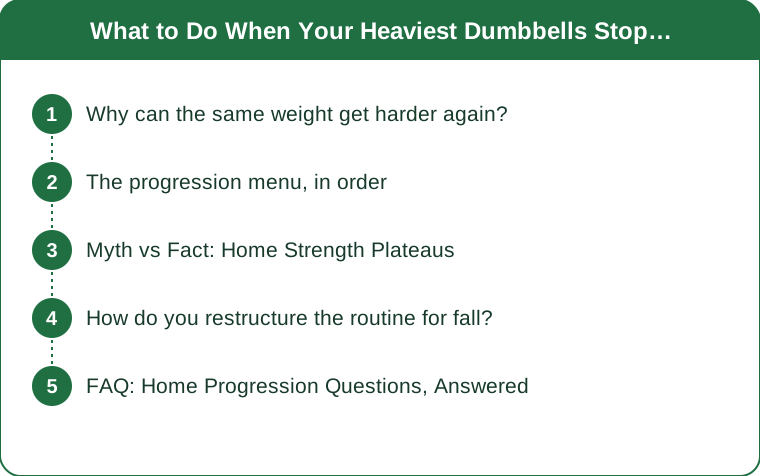
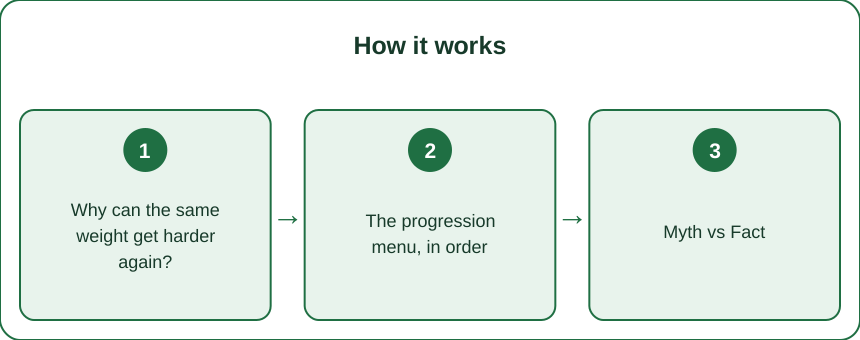
Why can the same weight get harder again?
Because muscles respond to tension and proximity to failure — not to the number stamped on the bell — and both are adjustable without spending anything.
The finding that reframes home training: lifting lighter loads to near failure produces muscle growth comparable to heavy loads, across a wide rep range — well beyond the old eight to twelve rule. A set of twenty goblet squats with your allegedly too light dumbbells, taken to within a rep or two of genuine failure, is a fully effective hypertrophy stimulus. What stopped working was not the weight; it was that fifteen comfortable reps ending three reps early stopped being close to failure.
And effective difficulty has more inputs than load:
Time under tension. A rep with a four second lowering phase roughly triples the muscle’s working time versus a one second drop. Twelve slow reps out-work twenty bounced ones with the same bell — and the lowering phase is where much of the growth signal lives.
The stretch reflex you have been borrowing. Touch and go reps use elastic rebound at the turnaround — free help. A two second pause at the bottom of a squat or the chest on a floor press deletes the rebound and makes the muscle produce every ounce of force from a dead stop.
Leverage and stability. Two dumbbells split across two legs is one problem; one dumbbell on one working leg is a different and much harder one — double the effective load per limb, plus a balance tax.
The plateau, honestly named, is that reps drifted fast, shallow, rested, and comfortably short of failure. Every one of those words is a dial — and the dials are free.
The progression menu, in order
Work the list top to bottom, changing one variable at a time, and the same pair of dumbbells funds months of progression.
One — tempo. Four seconds down, controlled up, on your main lifts: squats, presses, rows, hinges. This alone typically knocks a third off your rep count at the same weight, which is the sound of the exercise becoming productive again. Counting honestly is the skill; the first honest week is humbling.
Two — pauses. Add a two second hold at the hardest position — bottom of squats and presses, mid rep on rows. Pairs with tempo. The dead stop start is where light weights start feeling personal.
Three — unilateral. Single leg Romanian deadlifts, split squats and their elevated rear foot version, single arm presses and rows. Per limb load effectively doubles, the core works overtime against the asymmetry, and side to side gaps — future injury paperwork — get found and fixed.
Four — range. Stand on a low step for deficit lunges and Romanian deadlifts, elevate the feet for push variations, sink squats to full depth with the counterweight helping. New inches of range are new work the muscle has never done.
Five — density. Same session, less rest: trim thirty seconds between sets, or pair non competing moves — squat with row — into supersets. The cardiovascular system files a complaint; the calendar stays the same length.
Six — then load. When goblet squats survive slow tempo, pauses, and twenty honest reps, the muscle has outgrown the tool: that is a real signal to buy. The efficient purchase for a home rack is usually one adjustable pair covering the next several jumps, or a single heavier bell for the goblet and hinge patterns that outrun everything else first — plus a set of bands, which add resistance to every dumbbell you already own for the price of a takeout dinner.

Myth vs Fact: Home Strength Plateaus
Myth: light weights only tone; real growth needs heavy iron. Fact: the research is unambiguous that light loads to near failure grow muscle comparably to heavy loads. The non negotiable is effort, not poundage — which is convenient, because effort is the one thing a home gym stocks infinitely.
Myth: you should add weight every week. Fact: linear weekly jumps exhaust themselves within months for everyone, everywhere. Long term progress cycles through volume, density, tempo, range, and exercise difficulty — load is one lane of a six lane road, and the lifters who last rotate lanes.
Myth: twenty rep sets are just cardio. Fact: a twenty rep set ending near failure is hypertrophy work, full stop — the last five reps are the stimulus and the first fifteen are the commute. What turns high reps into cardio is stopping while they are still easy.
Myth: home training caps out once dumbbells feel light. Fact: the ceiling is far higher than the gear suggests — slow tempo unilateral work with modest bells reproduces loads most people never reach cleanly. The genuine home limits arrive at heavy hinge and pull patterns, which is a reason for one strategic purchase, not a gym contract.
Myth: soreness means the workout worked, and its absence means plateau. Fact: soreness tracks novelty, not productivity — a new variable makes anyone sore once. The honest scorecards are performance and near failure proximity: same weight for more slow honest reps is progress, sore or not.
Myth: you must train to absolute failure every set. Fact: within a rep or two of failure delivers the stimulus with less wear and cleaner form. Near failure is the target; collapse is a technique for highlight reels.
How do you restructure the routine for fall?
Turn the menu into a plan, time it to the season, and let the September reset energy do the scheduling.
Pick the six week block structure. Weeks one and two: tempo and pauses across your existing routine — no new exercises, just honest reps. Weeks three and four: swap the main lifts to unilateral versions at the same tempo. Weeks five and six: add range and compress rest. Log rep counts weekly; watching fifteen comfortable reps become nine honest ones and climb back to fifteen is the visible proof the same dumbbells got heavy again — and the log is what separates a program from a vibe.
The season is cooperating. Garage and spare room gyms are exiting the August heat that made slow tempo sets miserable, and the back to routine weeks of September are the year’s most reliable habit window outside January — with none of January’s crowding, because the home gym never queues. Cooler mornings also mean the warm up matters again: five minutes of movement before cold sets, where summer let you skip it.
Dress rehearsal notes for floor heavy blocks: unilateral and paused work lives close to the ground and in front of the mirror, where squat-proof leggings and a fitted top earn their keep — loose shorts and a paused split squat is a combination everyone abandons after one session.
And the standing boundary: joint pain that worsens through a block, sharp pain on specific movements, or a plateau that coincides with terrible sleep and appetite is not a programming puzzle — the first two are professional conversations, and the third is recovery, which no progression menu replaces. The menu makes dumbbells heavier; sleep and food make you stronger under them.
Six weeks from now the twenties will feel heavy again — and the next purchase, if it comes, will be a decision instead of a hope.
FAQ: Home Progression Questions, Answered
How do I know a set was actually close to failure?
The last two reps slow down involuntarily even though you are pushing at full intent — bar speed grinding despite maximum effort is the tell. If rep fifteen looks like rep three, the set ended early, whatever the burn said.
Which single exercise swap makes light dumbbells hardest fastest?
The rear foot elevated split squat, done slow — it doubles per leg load, adds a stability tax and a brutal range demand, and humbles almost everyone at half the weight they goblet squat. Runner up: the single leg Romanian deadlift for the entire back chain.
Are bands actually worth adding to dumbbells?
Genuinely — a band looped under the feet and over the shoulders or around the bell adds resistance that grows through the range, precisely where dumbbells lighten. They cover the load gap between your current pair and a future purchase for a fraction of the cost, and they pack away in a drawer.
When is buying heavier dumbbells actually the right call?
When slow paused twenty rep sets of the big patterns are honestly near failure proof — usually hinges and goblet squats first, since legs outrun any bell fastest. Buy for the exercises that maxed out, not the whole rack: one heavier bell plus the menu applied to everything else covers most home lifters for a year.
TL;DR:
- Muscles respond to tension and nearness to failure, not the stamped number — light loads to near failure grow muscle comparably to heavy ones.
- Run the menu in order: four second lowering, pauses at the hard position, unilateral versions, added range, compressed rest — then, and only then, buy load.
- Judge sets by involuntary rep slowdown, log weekly, and structure it as a six week block timed to the September routine reset.
- Bands bridge the gap cheaply, one strategic bell beats a full rack, and pain or bad sleep are recovery problems no progression fixes.
Tonight, take your too light dumbbells and do one set of goblet squats at four seconds down with a two second pause. Report back to yourself around rep nine — the twenties have something to tell you.
See It in Motion
Seen here: High Waist Yoga Leggings with Inner Pocket — shop it on bubblelime.com
Keep Reading
This article is for general informational purposes only and is not medical advice. It is not a substitute for professional diagnosis or treatment. Always consult a qualified healthcare provider about your individual situation, especially before making significant changes to your diet or exercise routine.