Why Skipping a Warm-Up Hits Harder at Home Than at the Gym
Quick Answer: Home workouts start from a colder baseline than gym workouts because you skip the walk in, the ambient warmth, and the unconscious mirroring of other people moving — which means a rushed or skipped warm-up carries more real injury risk at home, not less, even for the exact same main workout.
It’s tempting to treat a home workout as lower-stakes than a gym session and skip straight to the main set. But the body doesn’t know the difference between a squat rack and a living room rug — it only knows whether it’s actually warm.

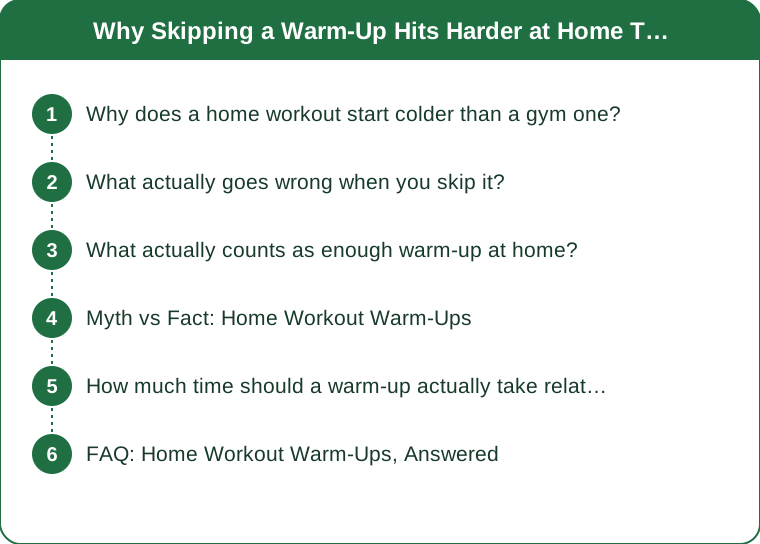
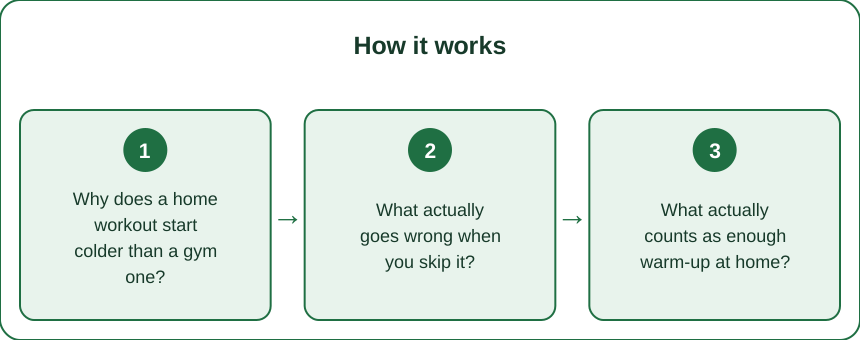
Why does a home workout start colder than a gym one?
At a gym, you’ve already walked from the car, climbed stairs, maybe waited for equipment — all low-level movement that raises core temperature before your “workout” technically starts. At home, you can go from sitting at a desk to a heavy first set in under sixty seconds, with zero incidental warm-up in between.
Gyms also run noticeably warmer than most homes, especially in cooler months, and being surrounded by other people already moving creates an unconscious pacing effect that naturally eases you in. None of that infrastructure exists in a living room.
What actually goes wrong when you skip it?
Cold muscle and connective tissue are measurably less elastic than warmed tissue, which raises strain risk specifically in the first few reps of a session — exactly when people skip the warm-up most. This shows up most often in explosive or fully-loaded first movements: a heavy first set of squats, a fast start to a HIIT circuit, jumping straight into burpees.
The injuries aren’t usually dramatic — most people report a nagging ache in a hip flexor, lower back, or shoulder that starts within a day or two of a rushed home session, not a sharp injury in the moment itself.
What actually counts as enough warm-up at home?
Five to seven minutes of genuinely rising heart rate and joint mobility work is the realistic minimum — not static stretching, which doesn’t raise core temperature the way dynamic movement does. Marching in place, arm circles, bodyweight squats, and light lunges for a few minutes covers most of what a gym’s incidental warm-up used to provide for free.
Match the warm-up to what’s coming: a lower-body day needs hip and ankle mobility work specifically, an upper-body day needs shoulder and thoracic rotation. A generic five minutes of jogging in place doesn’t fully prepare joints for a specific lift pattern.

Myth vs Fact: Home Workout Warm-Ups
Myth: “It’s just bodyweight, I don’t need to warm up.” Fact: bodyweight movements still load joints and connective tissue substantially, especially at higher rep counts or explosive tempos — cold tissue doesn’t care whether the resistance is a dumbbell or your own body weight.
Myth: “Stretching before a workout is the same as warming up.” Fact: static stretching a cold muscle doesn’t raise its temperature and can slightly reduce force output right before strength work — dynamic movement is what actually prepares tissue.
Myth: “Short home workouts don’t need a warm-up since they’re low intensity.” Fact: intensity relative to your own baseline matters more than absolute workout length — a fast 15-minute circuit can carry as much first-rep risk as a slower 45-minute session.
How much time should a warm-up actually take relative to the workout?
A reasonable rule of thumb is 10-15% of total session time, so a 5-minute warm-up for a 30-45 minute session is proportionate, not excessive. Shorter home sessions still need close to the same absolute warm-up time — a 20-minute workout doesn’t need a 2-minute warm-up just because the math would suggest it; the body’s warming curve doesn’t scale down that fast.
FAQ: Home Workout Warm-Ups, Answered
Can I just do my first exercise slower as a warm-up instead of separate warm-up moves?
Yes, this works reasonably well — doing your first set at 50-60% effort before ramping to full intensity accomplishes a lot of the same tissue-warming, as long as you’re genuinely moving slower and lighter, not just going through the motions.
Does a warm room mean I can skip the warm-up?
Ambient warmth helps but doesn’t replace movement-based warm-up — a warm room raises skin temperature, but joint mobility and elevated heart rate still need active movement to develop.
How do I know if I’m actually warmed up enough?
A light sweat starting and noticeably easier range of motion in your main joints (hips, shoulders) than when you started are the two clearest practical signs. This is general information, not medical advice — stop and reassess if you feel sharp pain rather than normal warm-up fatigue.
TL;DR:
- Home workouts skip the incidental warm-up (walking in, ambient heat, pacing off others) that gyms provide for free
- Cold tissue is less elastic, and most resulting injuries show up as a nagging ache a day or two later, not a dramatic in-the-moment injury
- 5-7 minutes of dynamic, movement-specific warm-up is the realistic minimum, even for short sessions
- Slowing down your first set can substitute for separate warm-up moves if done at genuinely reduced effort
A home workout without a real warm-up isn’t actually a shorter, easier version of a gym session — it’s a colder one, and that difference shows up in how your body feels the next day.
Keep Reading
This article is for general informational purposes only and is not medical advice. It is not a substitute for professional diagnosis or treatment. Always consult a qualified healthcare provider about your individual situation, especially before making significant changes to your diet or exercise routine.