3 Days a Week vs 5: Which Home Workout Schedule Actually Builds Strength?
Quick Answer: For most people doing bodyweight or light-dumbbell home training, 3-4 focused sessions a week with real recovery between them build strength faster than 5-6 shorter, fatigued sessions. Muscle grows during recovery, not during the workout itself.
It’s tempting to think more days means more progress, especially when a workout app is nudging you toward a daily streak. But home training has a recovery problem that gyms don’t — no fresh equipment forcing variation, no coach pacing you, just you deciding whether today is a rest day or not.

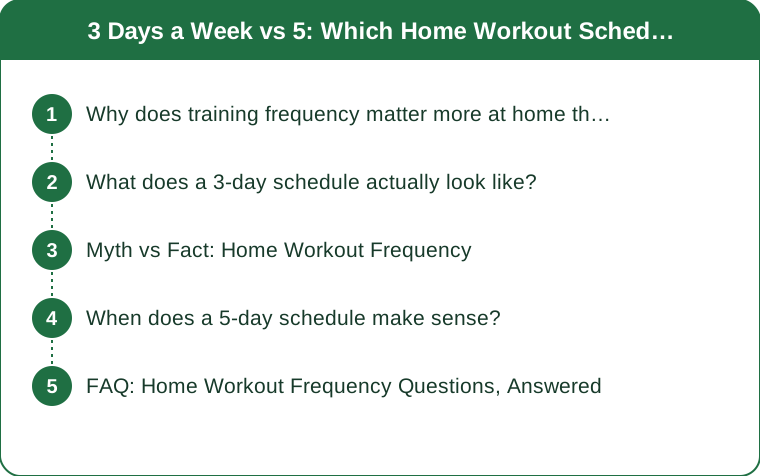
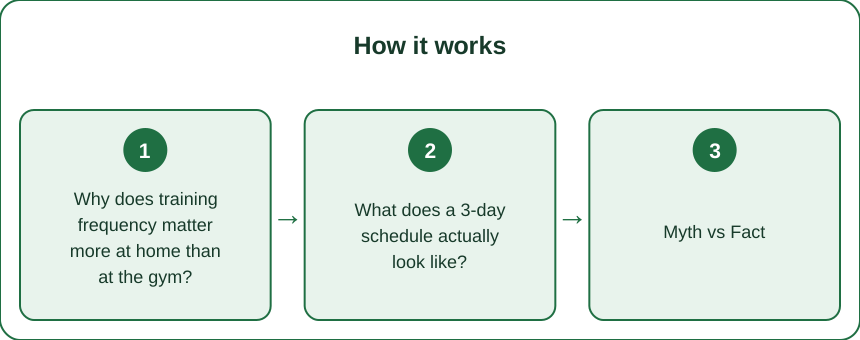
Why does training frequency matter more at home than at the gym?
At a gym, equipment variety and structured programming often force natural recovery between muscle groups without you planning for it. At home, the same few bodyweight movements — squats, push-ups, planks — get repeated constantly, which means the same joints and muscles take the load every single session unless you deliberately rotate focus.
Without that built-in variety, training 5-6 days a week on similar movement patterns tends to accumulate fatigue faster than strength, especially past the first few beginner weeks.
What does a 3-day schedule actually look like?
A well-built 3-day week alternates a full-body strength day, a rest or light mobility day, and repeats — giving 48+ hours between sessions that hit the same muscle groups hard. This spacing lets progressive overload (adding reps, slowing tempo, or adding resistance) actually stick, since you’re not showing up to squat again on tissue that’s still repairing.
Most people underestimate how much strength this schedule builds precisely because it feels like ‘less’ — but the recovery is doing real work in between.

Myth vs Fact: Home Workout Frequency
Myth: Training every day shows more discipline and gets faster results. Fact: Past a certain point, daily training on the same movement patterns increases injury risk and blunts progress — consistency matters more than raw frequency.
Myth: Rest days mean doing nothing at all. Fact: Light walking, stretching, or mobility work on rest days supports recovery without adding fatigue — ‘rest’ doesn’t have to mean total sedentary time.
Myth: A 5-day schedule is only for advanced exercisers. Fact: A 5-day schedule can work well for beginners too, but only if it properly splits muscle groups by day instead of repeating full-body work daily.
When does a 5-day schedule make sense?
A 5-day approach works well when it’s split by muscle group or movement pattern — lower body one day, upper body push another, core and mobility a third — so no single area gets hit two days in a row. This structure lets more total volume accumulate across the week without any one muscle group missing recovery time.
Without that split, a 5-day full-body repeat schedule is usually working against itself, trading quality for a sense of busyness.
FAQ: Home Workout Frequency Questions, Answered
Is it bad to do the exact same workout every day?
Repeating identical movements daily without recovery tends to cause plateaus and overuse strain — rotating focus areas or adding rest days produces better long-term strength results.
How do I know if I’m under-recovering between sessions?
Persistent soreness past 72 hours, declining performance on familiar movements, or feeling unusually fatigued are signs your schedule needs more recovery built in.
Can I switch from 5 days to 3 days without losing progress?
Yes — many people see equal or better strength gains switching to fewer, higher-quality sessions, since the missing piece was often recovery, not effort.
TL;DR:
- 3-4 well-spaced sessions often build more real strength than 5-6 fatigued ones
- Home training lacks the built-in variety gyms provide, so recovery must be planned deliberately
- A 5-day schedule only works well when split by muscle group, not repeated full-body
- Rest days should include light movement, not total inactivity
More days on the calendar isn’t the goal — more recovered, high-quality sessions is. Pick the schedule you can actually sustain and recover from, and the strength will follow.
Keep Reading
This article is for general informational purposes only and is not medical advice. It is not a substitute for professional diagnosis or treatment. Always consult a qualified healthcare provider about your individual situation, especially before making significant changes to your diet or exercise routine.