5 Signs Your Bodyweight Home Workout Has Plateaued (and the Fix for Each)
Quick Answer: The clearest plateau signs are reps getting easier without getting harder to add, no soreness after sessions that used to leave you sore, boredom with the same 4 moves, stalled photos/measurements despite consistency, and workouts finishing faster than they used to. Each has a specific fix — usually tempo, volume, or a genuinely new movement pattern, not just more reps.
You’re still showing up, still doing the workout — and still not seeing or feeling anything change. That’s not a motivation problem. It’s usually one of these five very fixable plateau signals.

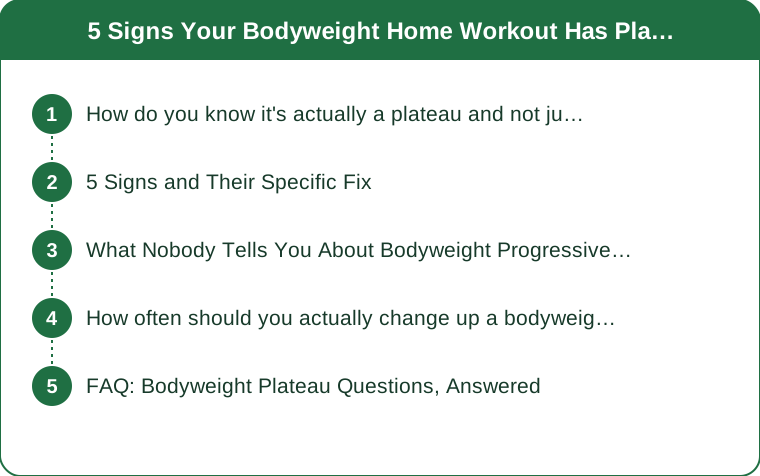
How do you know it’s actually a plateau and not just a normal plateau week?
A true plateau is 4+ weeks of no change in how a workout feels or looks, not one off week. If you can still point to small week-to-week shifts (slightly better form, slightly less fatigue), you’re still progressing — just slowly. If nothing has moved in a month, it’s time to change a variable, not push harder on the same one.
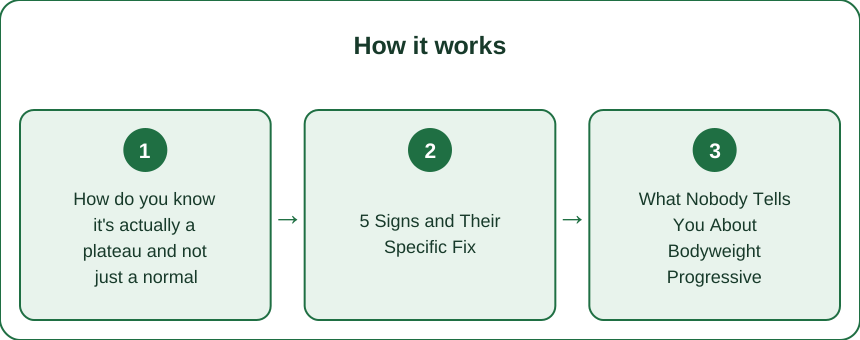
5 Signs and Their Specific Fix
1. The reps feel easy but you can’t add more. Bodyweight has a natural ceiling once basic reps get easy — the fix is tempo, not volume: slow the eccentric (lowering) phase to 3-4 seconds, which adds real difficulty without adding a single rep.
2. You’re not sore anymore, ever. Zero soreness after months of consistent training often means the stimulus stopped being new — swap one main move per week (regular pushup to decline pushup, for example) to reintroduce novel stress.
3. You’re bored, not just plateaued. Boredom often precedes a stalled result by weeks — rotating in a genuinely different modality (a resistance band, a new movement pattern like single-leg work) solves both the mental and physical stall together.
4. Measurements or photos haven’t shifted in a month. This is often a volume problem — check if total weekly training time has quietly dropped as the routine became familiar and less demanding to start.
5. Sessions finish faster than they used to, at the same ‘intensity.’ If a 30-minute workout now takes 22 minutes and feels the same, you’re resting less between sets or moving faster through reps — neither adds difficulty, just speed. Add a superset structure or reduce rest deliberately instead.

What Nobody Tells You About Bodyweight Progressive Overload
Progressive overload doesn’t require added weight — it requires added difficulty in any form: slower tempo, fewer rest seconds, an unstable surface, a single-limb variation, or a longer time-under-tension hold. Most people plateau on bodyweight training because they only think in terms of ‘more reps,’ which has a hard ceiling around 20-30 reps for most moves before form breaks down — well before real strength gains stop being possible through other variables.
How often should you actually change up a bodyweight routine?
Every 4-6 weeks, rotating at least one major variable (tempo, a new movement, added instability) even if everything still feels fine. Waiting until you’ve fully plateaued means losing weeks of progress you could have kept by rotating proactively instead of reactively.
FAQ: Bodyweight Plateau Questions, Answered
Can you build real strength with bodyweight alone, long-term?
Yes, especially with tempo and unilateral (single-limb) progressions — many advanced bodyweight movements (pistol squats, one-arm pushup progressions) are genuinely harder than moderate weight training.
Do you need equipment eventually to keep progressing?
Not necessarily for the first year or more of consistent training — resistance bands are a low-cost bridge if you do want added external load without a full home gym.
How long is too long to stay on the same bodyweight routine?
Beyond 6-8 weeks without any variable change is when a plateau becomes likely rather than possible — build in rotation before that point, not after.
TL;DR:
- 4+ weeks of no change is a real plateau, not a normal off week
- Add difficulty through tempo, rest reduction, or new movement — not just more reps
- Rotate at least one major variable every 4-6 weeks, proactively
- Bodyweight training can keep building real strength well past the beginner stage
Check which of the 5 signs matches what you’re feeling, apply that one fix, and give it 2 weeks before judging results.
Keep Reading
This article is for general informational purposes only and is not medical advice. It is not a substitute for professional diagnosis or treatment. Always consult a qualified healthcare provider about your individual situation, especially before making significant changes to your diet or exercise routine.