Why Home Workouts Stop Working Faster Than Gym Workouts (and the Fix)
Quick Answer: Home workouts plateau faster because bodyweight exercises have a natural ceiling without added resistance — your body adapts to the same movement pattern within weeks. Adding tempo changes, unilateral variations, and resistance bands extends progress well beyond what bodyweight alone allows.
Your home workout felt genuinely hard the first few weeks. Now the same routine barely raises your heart rate. That’s not you getting lazy — it’s your body doing exactly what it’s supposed to do with a fixed, unchanging load.

Why do bodyweight routines plateau faster than weighted gym workouts?
In a gym, progressive overload is simple: add 5 more pounds to the bar every week or two. At home with just bodyweight, the resistance is fixed at your own body weight, so once your muscles adapt to moving that weight, there’s no automatic way to keep increasing the demand without changing something else about the exercise.
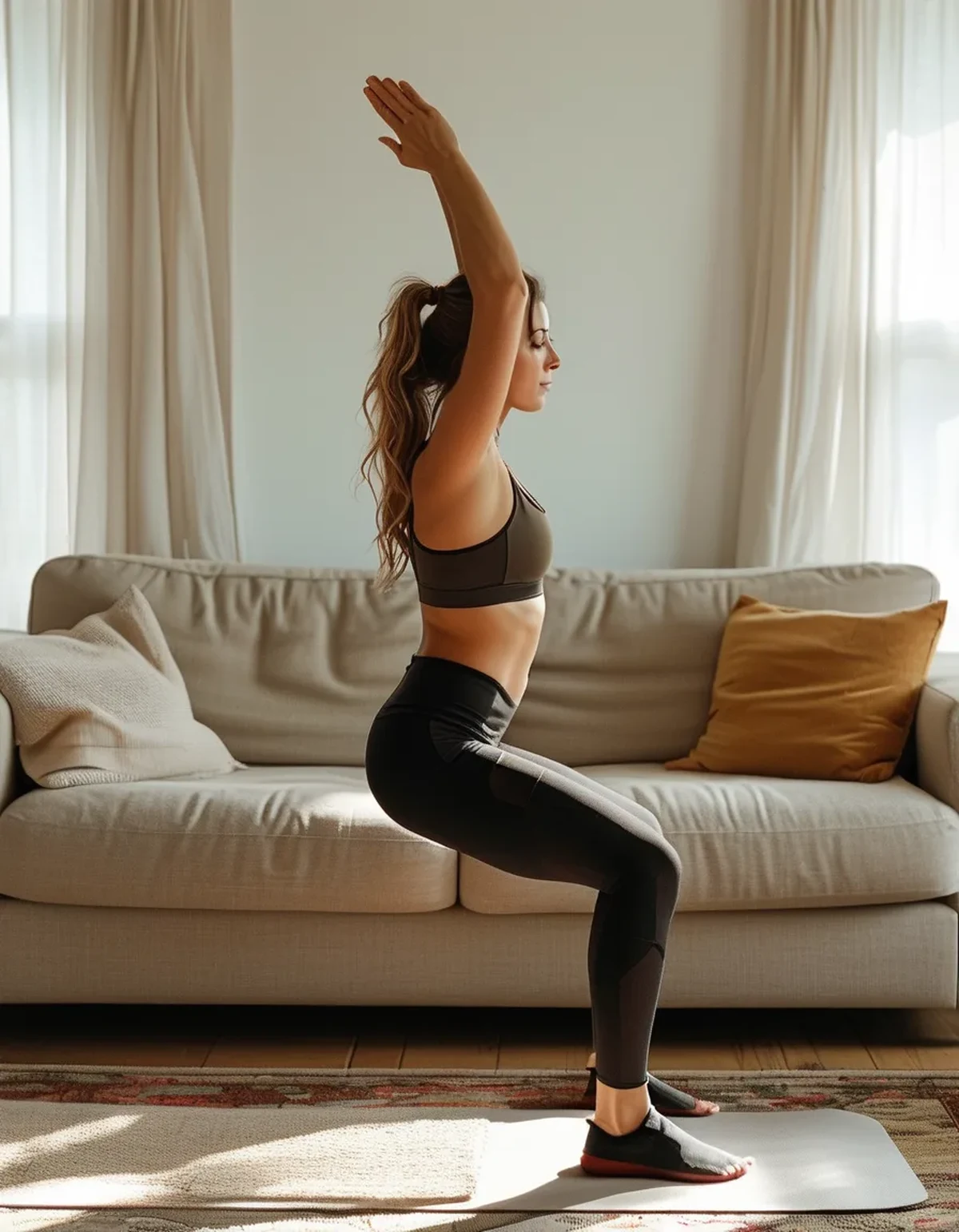
This is why a bodyweight squat that felt hard in week one can feel almost easy by week four — the resistance never increased, only your capacity did.
What actually creates progressive overload without added weight?
Slowing the tempo (a 4-second lowering phase instead of 1 second) dramatically increases time under tension without any equipment, forcing muscles to work harder through the same range of motion. Unilateral variations — single-leg squats instead of two-leg, single-arm pushups progressions — also increase difficulty by removing the assistance of the second limb.
Resistance bands are the most direct fix, adding genuine, adjustable external load to bodyweight movements for a relatively small equipment investment, closing much of the gap with gym-based progressive overload.
What Nobody Tells You About Rep Count Increases
Most people respond to a home workout plateau by simply adding more reps or sets, which does help temporarily but has real diminishing returns — at some point you’re building endurance more than strength, and sessions become very long for modest gain. Changing the exercise mechanics (tempo, unilateral, band resistance) is a more time-efficient way to keep progressing than just doing more of the same movement.
Rotating which progression method you use every few weeks — tempo one cycle, unilateral the next, bands after that — also keeps the stimulus varied enough that your body doesn’t fully adapt to any single method.
Does this mean gym workouts are always better for progress?
Not necessarily — gyms make progressive overload more convenient, not fundamentally more effective, since a well-programmed home routine using tempo, unilateral work, and bands can produce comparable strength gains for most non-competitive fitness goals. The real difference is that home progress requires more intentional variable-changing rather than a simple weight increase.
For building significant maximal strength beyond a certain point, added external weight (dumbbells, a barbell) eventually becomes necessary, since bodyweight and bands have a practical ceiling too.
FAQ: Home Workout Progression Questions, Answered
How often should I change my progression method at home?
Every 3-4 weeks is a reasonable cycle — long enough to see adaptation, short enough to avoid a full plateau.
Are resistance bands really comparable to weights?
For moderate strength goals, yes — bands provide genuine adjustable resistance, though very advanced lifters will eventually need heavier free weights.
Is slowing tempo enough on its own to keep progressing?
It helps significantly but works best combined with unilateral variations or bands rather than as a standalone long-term strategy.
TL;DR:
- Bodyweight workouts plateau faster because resistance stays fixed at your own body weight
- Slowing tempo and using unilateral variations increase difficulty without equipment
- Resistance bands add genuine adjustable load, closing much of the gap with gym training
- Rotate progression methods every 3-4 weeks to avoid re-plateauing
If your home routine has felt too easy lately, that’s your body telling you it’s time to change the variable, not just add more reps.
Keep Reading
This article is for general informational purposes only and is not medical advice. It is not a substitute for professional diagnosis or treatment. Always consult a qualified healthcare provider about your individual situation, especially before making significant changes to your diet or exercise routine.