Stuck on the Same Bodyweight Home Workout for Months? Here's the Progressive Overload Fix
Quick Answer: Bodyweight plateaus break through tempo changes, unilateral variations, reduced rest, and leverage-based progressions (like moving from a knee push-up to a decline push-up) — not just doing more reps of the same movement.
‘Just do more reps’ is the most common bodyweight progression advice, and it’s also the slowest, most plateau-prone way to keep advancing. Real progressive overload without equipment relies on a handful of other levers that most home-workout routines never touch.

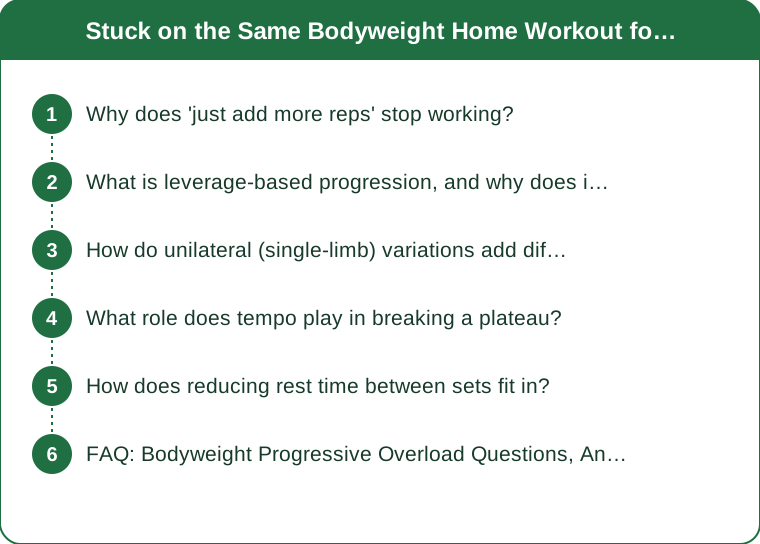
Why does ‘just add more reps’ stop working?
More reps of the same movement mostly builds muscular endurance past a certain point, not continued strength gain — your body adapts to a stable movement pattern and stops being meaningfully challenged by simply repeating it more times. This is the single biggest reason bodyweight routines plateau within a few months of consistent training.
What is leverage-based progression, and why does it matter most?
Changing the body’s leverage against gravity — moving from a knee push-up to a standard push-up to a decline push-up, for example — increases the actual resistance your muscles work against, functioning similarly to adding external weight. This is the single most powerful lever in bodyweight training and the one most home routines underuse.
How do unilateral (single-limb) variations add difficulty?
Moving from a two-leg squat to a single-leg (pistol-progression) squat, or two-arm to one-arm-assisted push-up work, doubles the load each limb handles relative to bodyweight — a direct, significant difficulty jump without needing any equipment at all.

What role does tempo play in breaking a plateau?
Slowing the eccentric (lowering) phase to 3-4 seconds dramatically increases time under tension and muscle recruitment compared to a normal-speed rep — this is a genuinely underused lever that turns a ‘too easy’ bodyweight movement meaningfully harder without changing the exercise itself.
How does reducing rest time between sets fit in?
Shorter rest increases metabolic and cardiovascular demand, which is a real training stimulus, but it’s a different adaptation than pure strength progression — useful as one lever among several, not a substitute for leverage and unilateral progressions if strength is the specific goal.
FAQ: Bodyweight Progressive Overload Questions, Answered
Can you really keep building strength with just bodyweight training?
Yes, well past the beginner stage, as long as you’re actively using leverage changes and unilateral progressions — the ceiling is much higher than ‘just add reps’ training suggests.
How often should I change my bodyweight routine to avoid a plateau?
Every 4-6 weeks is a reasonable rhythm for introducing a new progression lever, whether that’s tempo, leverage, or a unilateral variation.
What’s the single best bodyweight progression for someone stuck doing standard push-ups?
Decline push-ups (feet elevated) are usually the most accessible next leverage step — same movement pattern, meaningfully more resistance, no equipment required beyond a stable elevated surface.
TL;DR:
- ‘More reps’ mostly builds endurance, not continued strength — it plateaus fast
- Leverage changes (like knee to decline push-ups) are the strongest bodyweight progression lever
- Unilateral (single-limb) variations double the relative load per limb
- Slower tempo and shorter rest are useful secondary levers, not primary ones
Bodyweight training has a much higher ceiling than most routines use — the plateau is usually a progression-strategy problem, not a bodyweight-training limit.
Keep Reading
This article is for general informational purposes only and is not medical advice. It is not a substitute for professional diagnosis or treatment. Always consult a qualified healthcare provider about your individual situation, especially before making significant changes to your diet or exercise routine.