Why Bodyweight Home Workouts Stop Working After a Few Months, and the Fix
Bodyweight home workouts often deliver real progress for the first couple of months and then quietly plateau, not because bodyweight training stops working, but because the same fixed set of exercises stops providing enough of a challenge once the body adapts, and progress requires deliberately increasing difficulty rather than just repeating the routine.

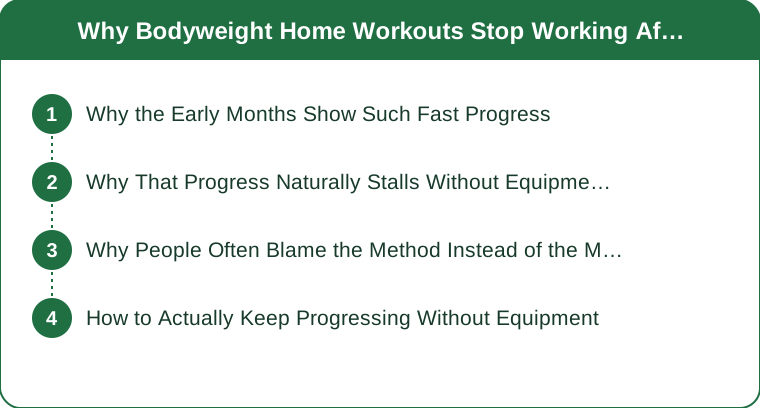
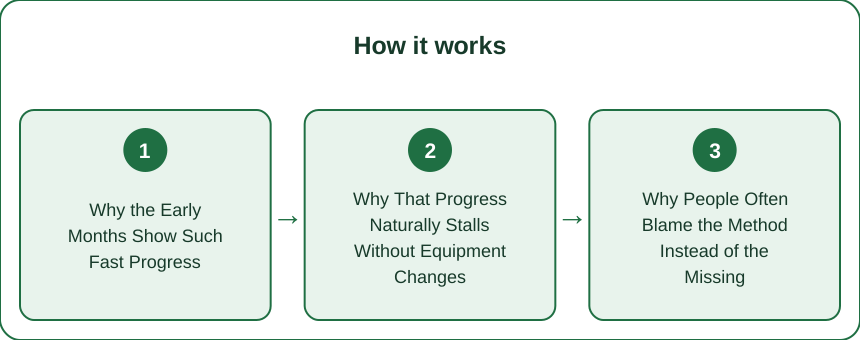
Why the Early Months Show Such Fast Progress
The initial adaptation: muscles and coordination responding quickly to any new consistent stimulus, which is why basic bodyweight moves like push-ups and squats tend to produce noticeable strength and endurance gains fairly quickly for someone new to structured training.
Why That Progress Naturally Stalls Without Equipment Changes
The plateau mechanism: the core principle behind any strength progress, progressive overload, requiring a gradually increasing challenge over time, and a fixed set of bodyweight exercises performed the same way each session stops providing that increasing challenge once the body fully adapts to the current difficulty.

Why People Often Blame the Method Instead of the Missing Progression
The misdiagnosis: a plateau after repeating the same bodyweight circuit for months getting read as proof that bodyweight training has a hard ceiling, when the actual issue is that the workout itself never changed to keep pace with the body’s adaptation.
How to Actually Keep Progressing Without Equipment
The practical fixes: increasing difficulty through harder exercise variations, such as moving from a regular to a decline or single-leg version, slowing the tempo to increase time under tension, or reducing rest periods between sets, and the frame (bodyweight plateaus come from a stagnant routine, not a ceiling on bodyweight training itself — deliberately harder variations and tempo changes are what actually restart progress.)
Bodyweight home workouts often deliver real progress for the first couple of months and then quietly plateau, not because bodyweight training stops working, but because progressive overload requires a gradually increasing challenge over time, and a fixed set of bodyweight exercises performed the same way each session stops providing that increasing challenge once the body fully adapts to the current difficulty. A plateau after repeating the same bodyweight circuit for months often gets read as proof that bodyweight training has a hard ceiling, when the actual issue is that the workout itself never changed to keep pace with the body’s adaptation. Increasing difficulty through harder exercise variations, slowing the tempo to increase time under tension, or reducing rest periods between sets is what actually restarts progress without needing any equipment.
Keep Reading
This article is for general informational purposes only and is not medical advice. It is not a substitute for professional diagnosis or treatment. Always consult a qualified healthcare provider about your individual situation, especially before making significant changes to your diet or exercise routine.